
Get guides like this in your inbox every Thursday
Read it here free, or subscribe and get every new one, plus the AI news that matters.
Free, plus 4 starter guides and 55 video effects for Claude when you join. One email a week. Unsubscribe anytime.
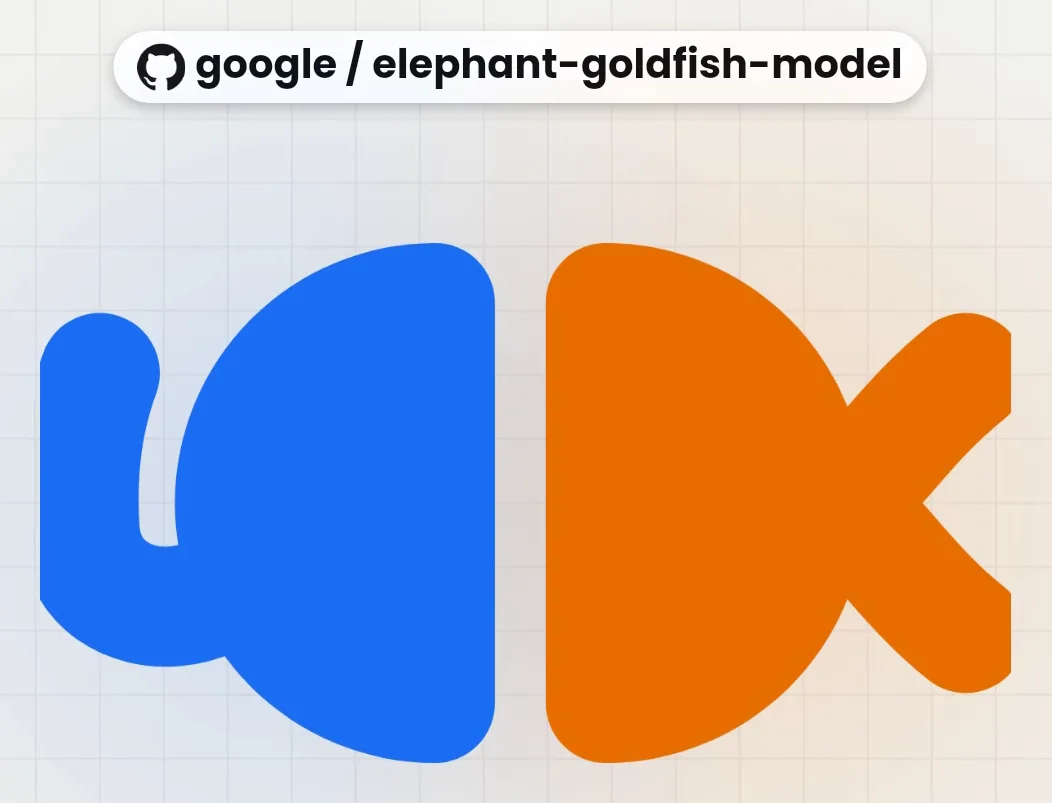
What is the Elephant-Goldfish Model?
The Elephant-Goldfish Model (EGM) is a free, open-source plugin from Google that makes your AI coding agent design before the agent writes code. Google open-sourced EGM on 22 October 2026 under the Apache 2.0 licence. According to Google's Open Source Blog, thousands of Googlers use the plugin every day to ship production code, and the GitHub repo had over 20,000 stars in November 2026.
The name explains the method. The Elephant is your main AI session, which remembers the whole project and drafts a design document. The Goldfish are fresh AI reviewers with no memory of that conversation, so the reviewers read the design cold, like a new teammate would. For example, a Goldfish reviewer can flag a missing assumption, an unclear requirement or a risky rollout. The workflow runs in four steps: first brainstorm, then draft, then review, and finally approve the design before Claude Code writes any code. EGM works with Claude Code, Codex and Google's Antigravity.
why it worksWhy does a reviewer with no memory help?
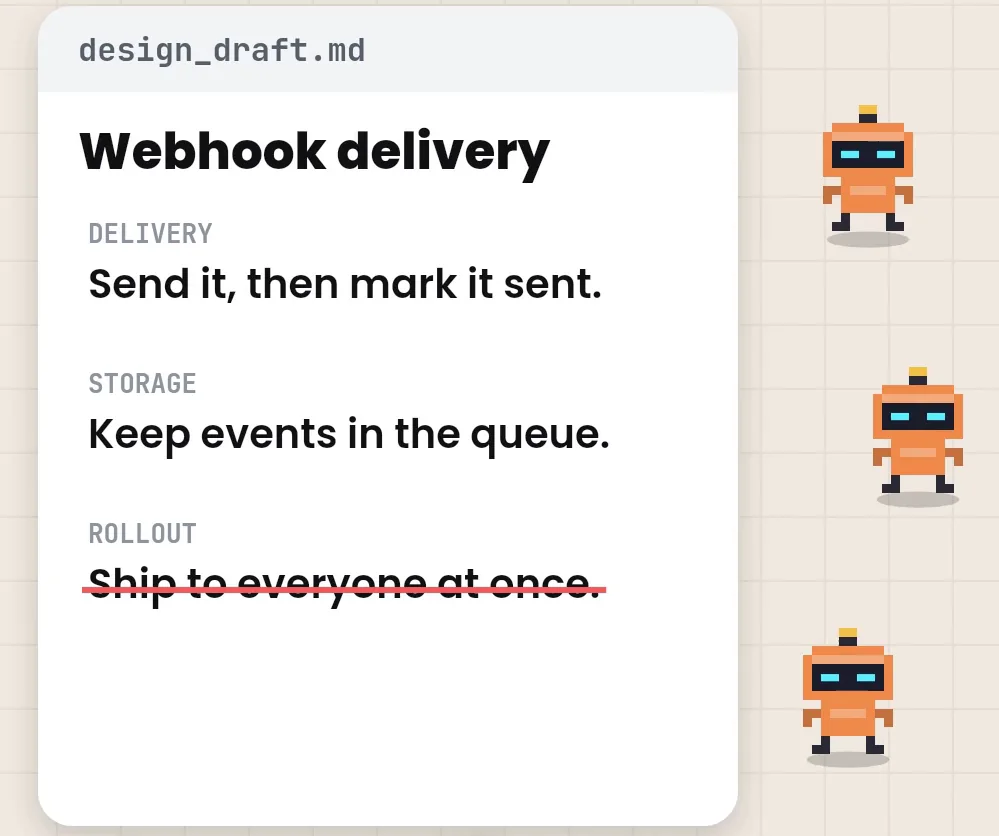
The AI that wrote a plan fills any gaps from its memory of the chat, so the plan looks clear to it. A reviewer that only sees the document can't do that, so it has to say what's missing or unclear. For example, in the reel's webhook design, a fresh reviewer strikes out a plan to ship to everyone at once before any code exists.
How do you install it in Claude Code?
claude plugin marketplace add google/elephant-goldfish-model
claude plugin install egm@egm
Then start a new Claude Code session. EGM also works with Codex and Google's Antigravity, with their own install commands in the README. Whichever you use, it needs an agent that can start fresh subagents; without them, EGM stops the review rather than pretend.
step 2How do you run your first design review?
- Brainstorm. Describe what you want to build. EGM writes a
concepts_brief.md. - Draft. It turns the brief into
design_draft.md, pausing after each section for your input. - Review. Fresh reviewers check the design, how clear it is, how it fits your code and the implementation plan. You choose which findings to act on.
- Approve and build. Once you're happy, ask Claude Code to implement the approved design.
/egm:egm-brainstorm Add webhook delivery to this project.
/egm:egm-draft
/egm:egm-review design_draft.md
Implement the approved design in design_draft.md.
Already have a design doc, a README or a plan for a pull request? Review it straight away by pointing /egm:egm-review at the file, for example /egm:egm-review docs/designs/webhooks.md.
What should you check before using EGM?
- It uses more tokens up front. Every fresh reviewer is another AI session reading your design, so a review costs more than asking for code straight away. The aim is to spend less on fixing things later.
- A review doesn't replace tests. The README says so directly: you still need tests and your own judgment.
- It's built for software designs. For other documents, use
/egm:egm-review-loop. - It's free, but not an official Google product. Google open-sourced it, and the README says it isn't an officially supported Google product.
- Your agent still costs money. Claude Code needs a paid Claude plan.
Who made the Elephant-Goldfish Model?
Google built EGM for its own engineers and released it on its Open Source Blog. The idea comes from Dave Rensin's essay Elephants, Goldfish, and the New Golden Age of Software Engineering. The full instructions live in the GitHub repo.
all the linksLinks 🔗
- Elephant-Goldfish Model (GitHub) — The plugin, Apache 2.0 licence
- Google Open Source Blog — Google's announcement, 22 October 2026
- 5 free Claude Code add-ons — Limits, memory and tokens
- 5 Claude Code shortcuts — Move around Claude Code faster
Liked this? Get the next one in your inbox.
Every Thursday I research the latest AI systems and workflows, then break the best one down into simple steps, with prompts you can copy. Plus the AI news that changes what you can do.
Free, plus 4 starter guides and 55 video effects for Claude when you join. One email a week. Unsubscribe anytime.